

Splendid Stories of Disorder (II)
The Biscuit Factory, Lisbon (PT)
2017
The sedimentation of memories
The fragility of suspension
Full circle
Seeking the unseen
Capturing the fleeting
A protest against forgetting *
Hide and seek
Words and images
Burning books
Trial and error
If time does not exist
Fixing mistakes
Unfinished sentences
Sites under (de)construction
Secrets
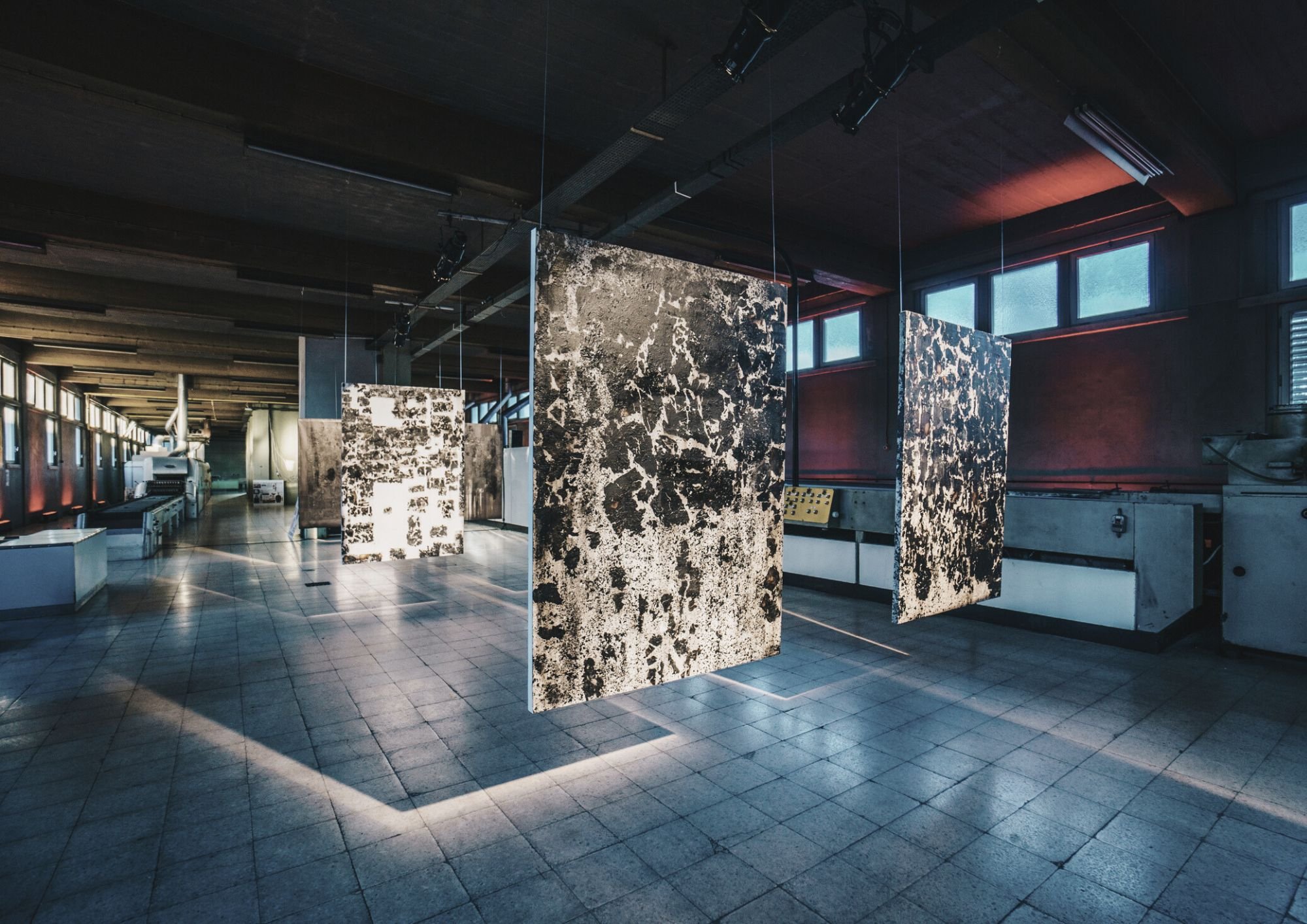
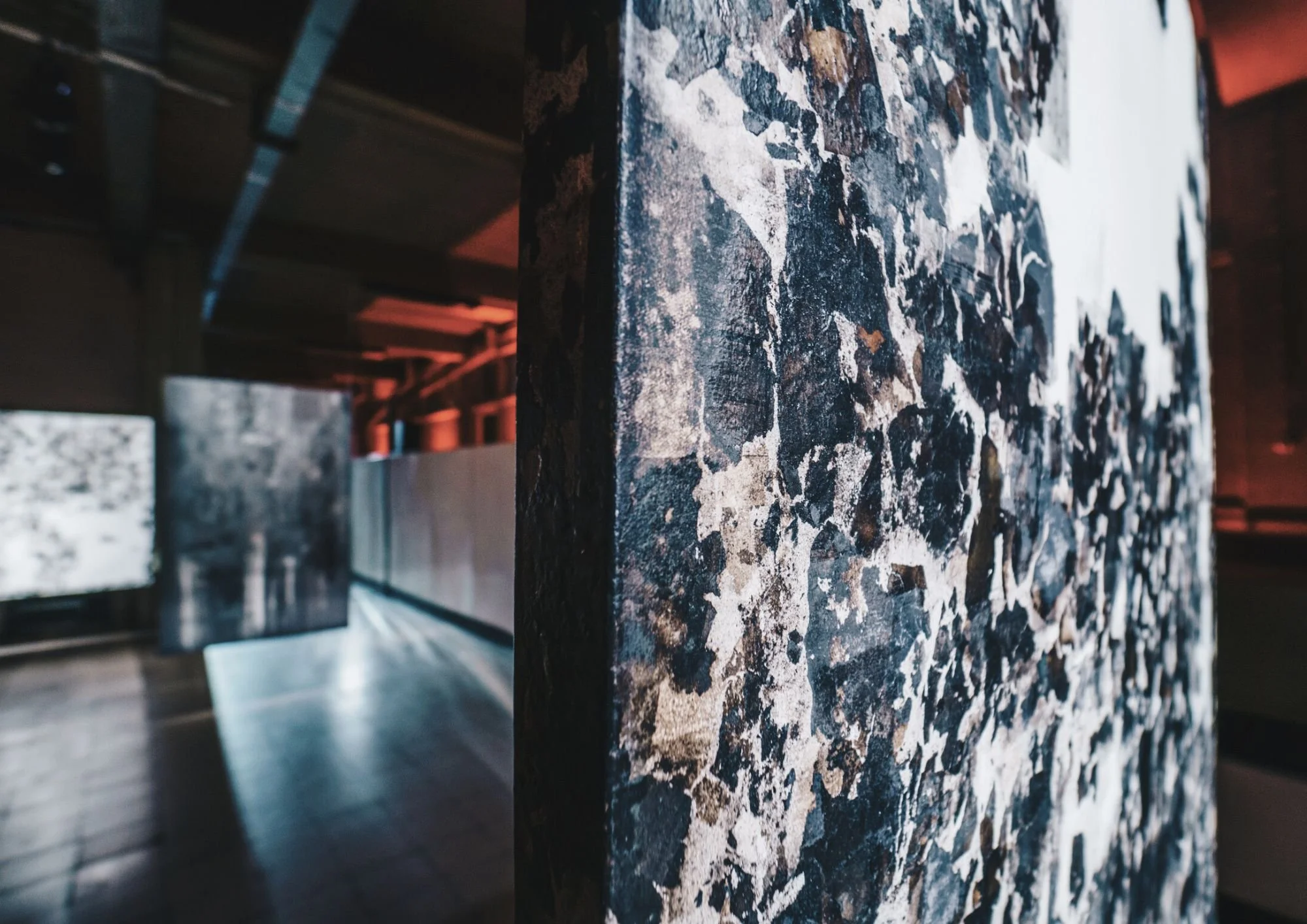
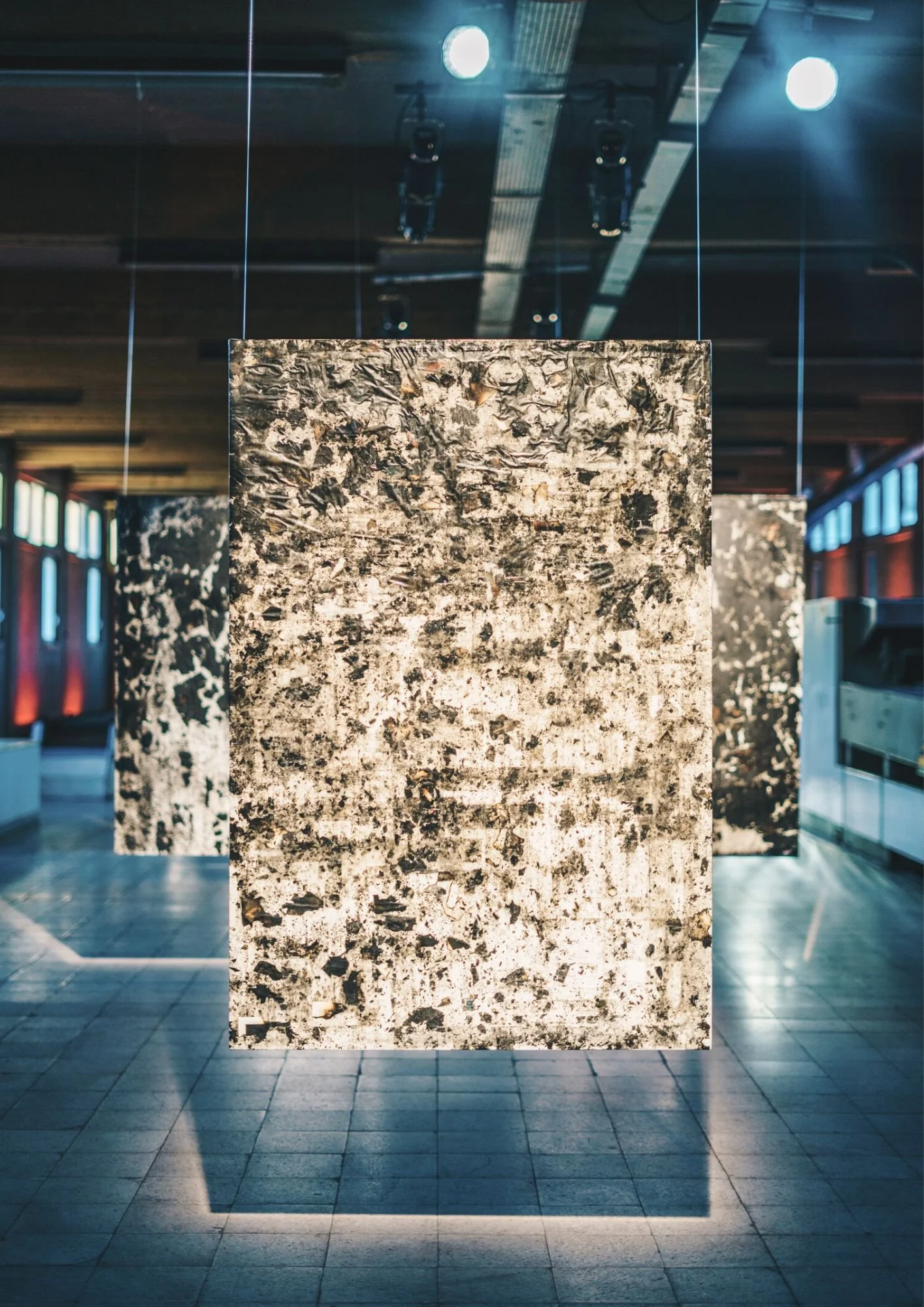
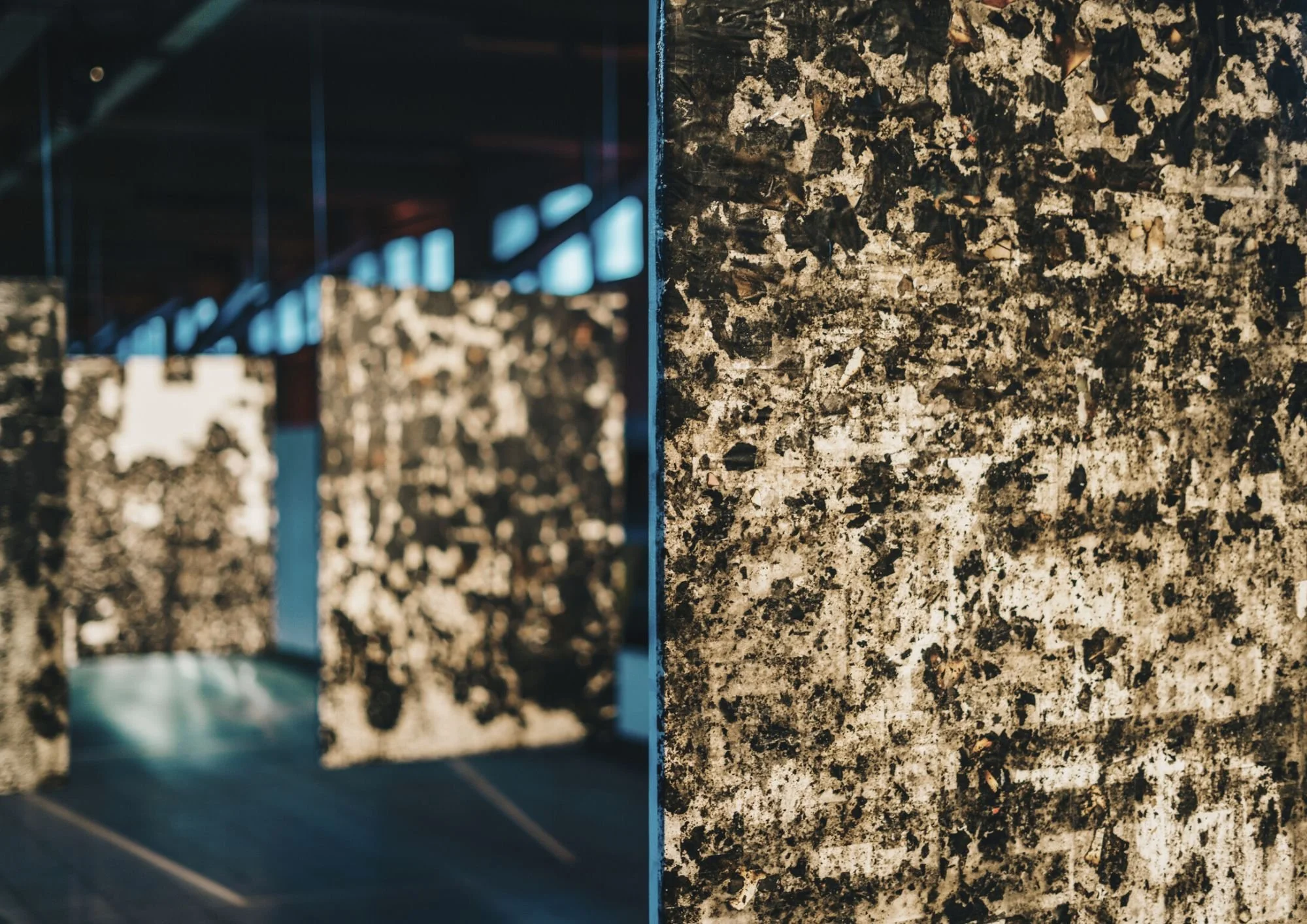
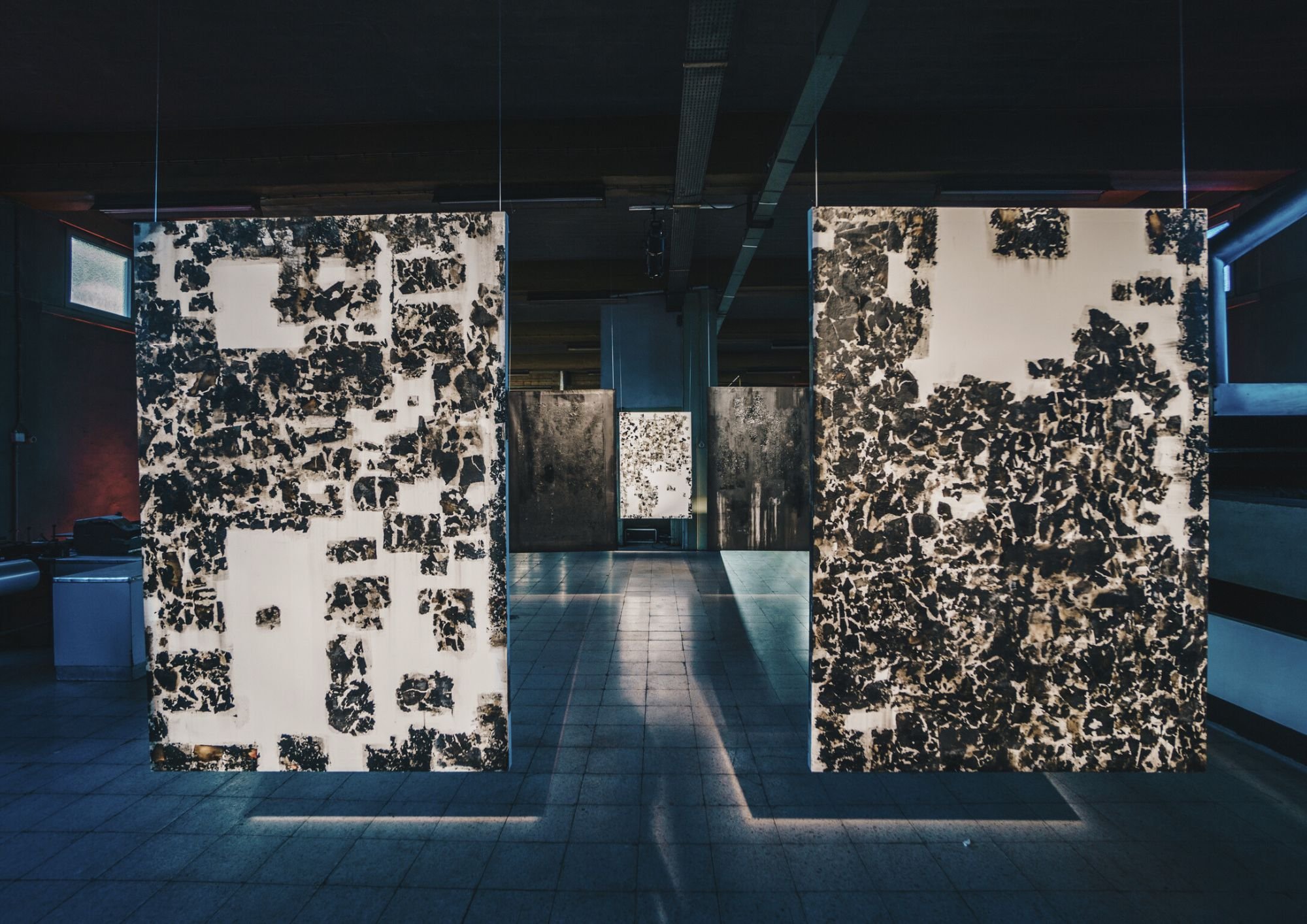
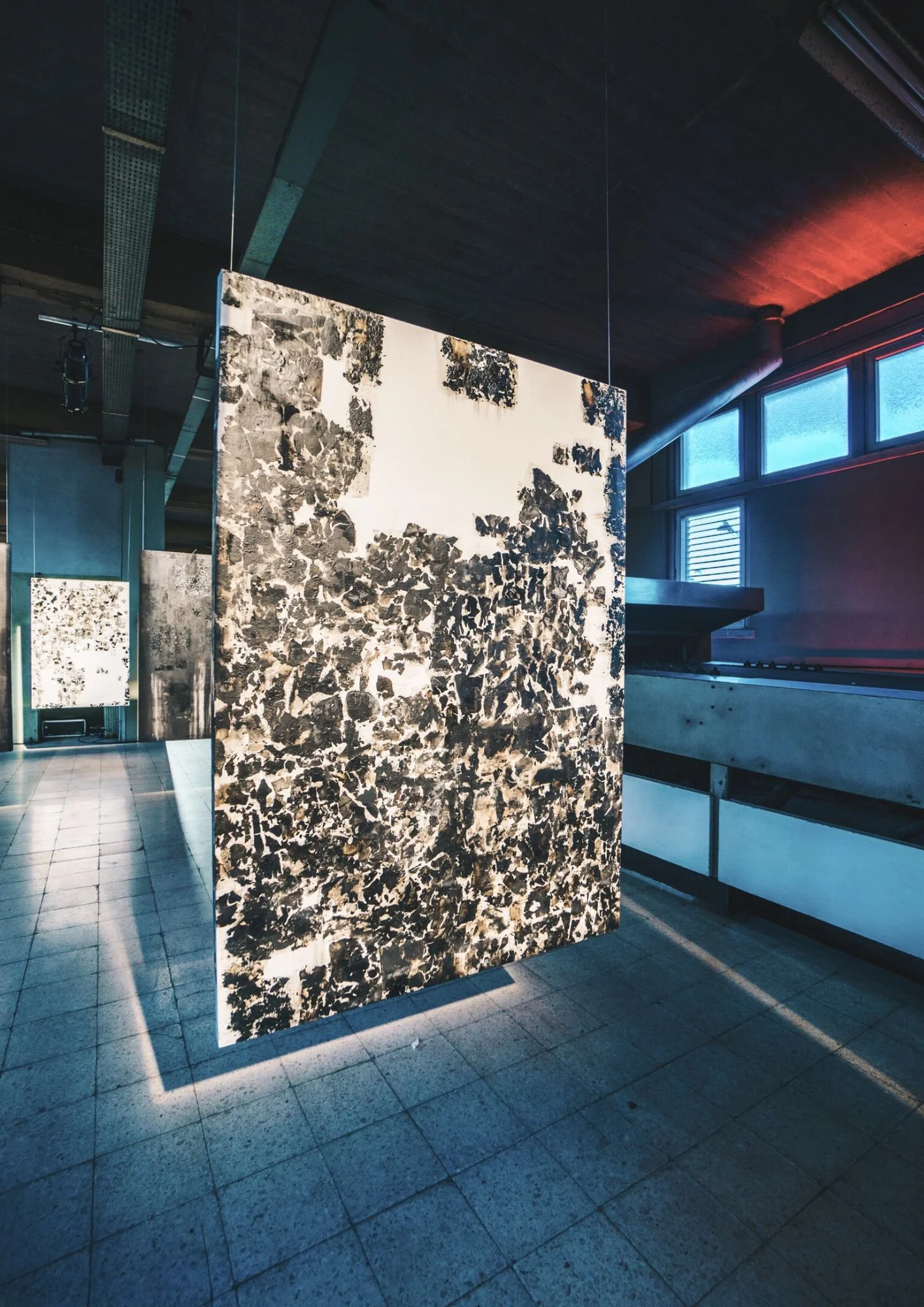
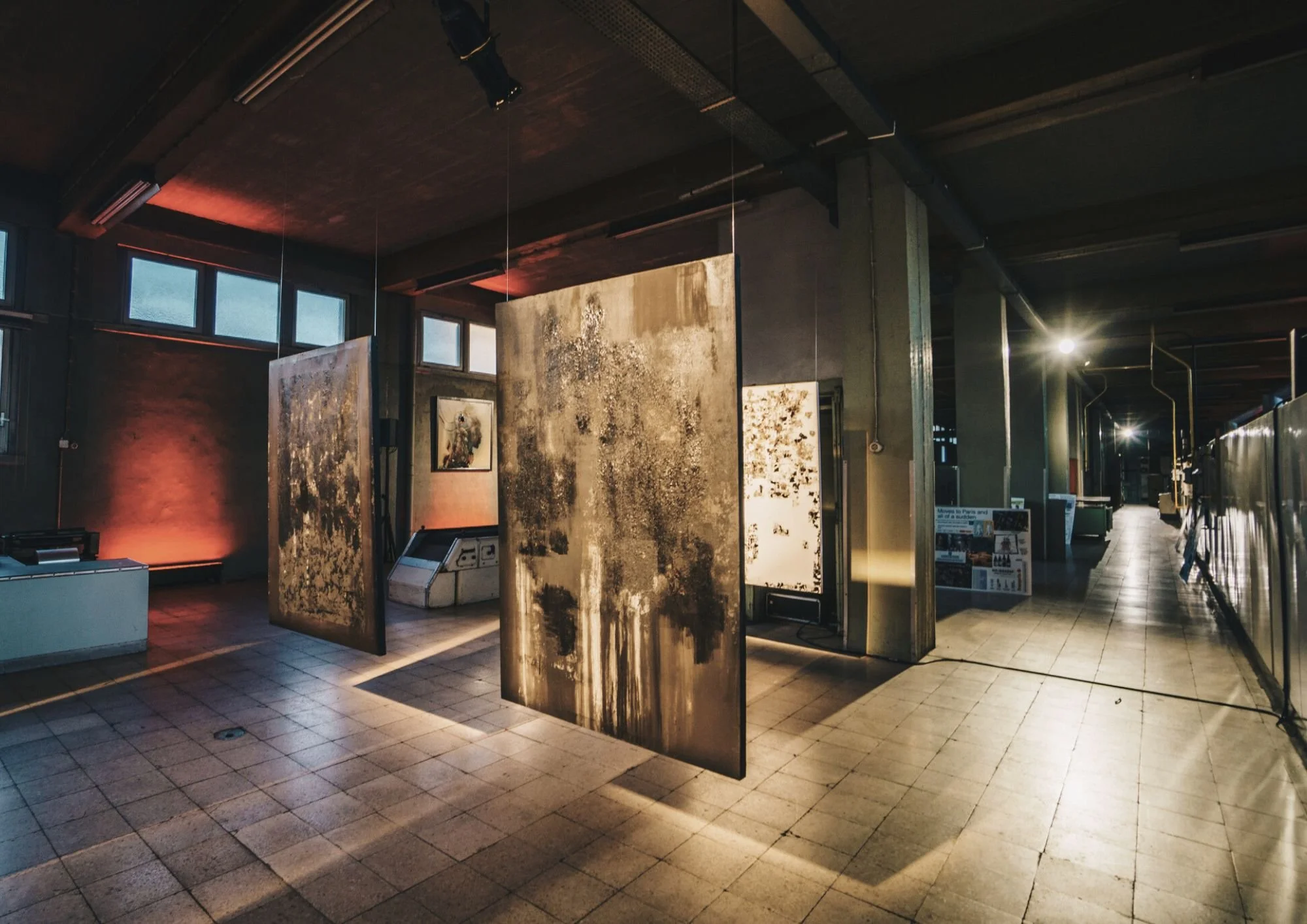
In Splendid Stories of Disorder (II), Diane Giraud transforms the remnants of her personal library into a suspended, almost theatrical environment. Canvases float like fragments of thought, built from burnt pages, ashes, and transparent tape. Texts that once carried meaning are now partially erased, scorched, or fragmented, leaving only traces for the viewer to discover. What survives are hints, echoes, and residues—an invitation to navigate between what is visible and what lingers in absence.
Words in Giraud’s practice often function as invisible agents: handwritten instructions or wry prompts on masking tape appear in other works, guiding actions, interrupting assumptions, or sparking small gestures of attention. In this installation, their spirit remains embedded in the burnt and broken pages, suggesting language’s ongoing presence even in its destruction. The canvases do not narrate, they propose: a space to reflect, to wander, and to experience the persistence of thought and memory in flux.
The visual fragments are complemented by the soundscape Time Does Not Exist, produced by Aurélien Rivière. Known internationally as DoubtingThomas, Rivière has experimented across electronic and world music for decades, and his compositions for this work extend the installation’s non-linear logic. The sound envelops the space without dictating it, creating a temporal field where fragments of language, memory, and image resonate and overlap, reinforcing the sense that nothing ever settles completely.
Together, image and sound invite an active form of attention: to inhabit the space of disappearance, to witness remnants, and to recognize that in the incompleteness of language and matter, connections continue to emerge. Here, disorder is not chaos but a method—a way of thinking, remembering, and imagining that refuses finality while celebrating the fragile persistence of stories.
* Eric Hobsbawm
Splendid Stories of Disorder (II)
The Biscuit Factory, Hub Criativo do Beato (HCB), Lisbon (PT)
2017
Site-specific installation with burnt papers, ashes, tape on floating canvases
+ Original soundscape Time Does Not Exist produced by Aurélien Rivière
In partnership with Startup Portugal